


Zen-Noh announces the purchase of 30% from Grupo Cereal with SL Process participating as advisor.
Zen-Noh announced an agreement to acquire a stake from 30% in Grupo Cereal, a Brazilian agribusiness company based in Rio Verde, Goiás.
The operation expands the Japanese organization's presence in Brazilian agribusiness and brings together two complementary structures: on one hand, the regional operations, relationships with producers, and agro-industrial capacity of the Cereal Group; on the other, the international presence, commercial network, and investment capacity of Zen-Noh.
A SL Process Zen-Noh joined the group of advisors for the transaction, alongside Deloitte and Santos Neto Advogados. Grupo Cereal was advised by Rabobank and Alianzo. The value of the transaction was not disclosed, and the completion of the deal is still subject to applicable regulatory approvals.
Understand the key points of the operation.
The agreement establishes Zen-Noh's entry as a minority shareholder in the Cereal Group, with a stake of 30%.
The Barauna family, founders of the Cereal Group, will retain 70% of the company's capital. Therefore, they will continue to be responsible for shareholding control, management, and strategic direction of the company.
The founder, Evaristo Lira Barauna, will assume the presidency of the Council.The group's management structure. The defined structure seeks to preserve the experience of local management while incorporating the international presence and investment capacity of the new shareholder.
The operation was announced on July 24, 2026, but its completion is still subject to review and authorization by the relevant regulatory bodies. To date, the financial details involved have not been disclosed.
Why did Zen-Noh decide to invest in the Cereal Group?
According to information released by the companies, the choice of Grupo Cereal is related to its trajectory of more than four decades, the reputation it has built in the market, its knowledge of Brazilian agribusiness, and the relationship it maintains with rural producers.
The option of a minority stake, instead of a full acquisition, was also presented as a way to preserve local management and family control of the Brazilian company.
The expectation is to combine the regional knowledge of the Cereal Group with the international experience and investment capacity of Zen-Noh. This structure could support the growth of the Goiás-based company without interrupting its administrative and operational continuity.
Among the objectives stated by the companies are strengthening the Cereal Group's investment capacity, expanding grain receiving and storage infrastructure, geographically expanding operations, and developing new business opportunities.
Who is Zen-Noh?
Zen-Noh is a Japanese federation linked to the JA system, the Japan Agricultural Cooperatives, an organization formed to support agricultural producers and cooperatives in Japan.
Founded in 1972, Zen-Noh participates in the marketing and supply chain of the Japanese cooperative system. Its activities include supplying inputs, marketing agricultural products, and developing structures designed to ensure security and stability of supply.
Zen-Noh Grain Brasil was established in 2015 as a subsidiary of Zen-Noh Grain Corporation, a company founded in the United States in 1979. The Brazilian operation aims to contribute to the supply of grains to Japan and other markets and to strengthen the supply chain through local investments and partnerships.
The organization has a presence in different regions of the world and already has other investments in Brazilian agribusiness.
One of them is the stake in ALZ Grãos, a company formed with Amaggi and Louis Dreyfus Company. ALZ operates in the trading of soybeans and corn and in port operations linked to the Maranhão Grain Terminal, Tegram.
Joining the Cereal Group expands Zen-Noh's operations in the country and strengthens its connection to the origination, storage, processing, and marketing of Brazilian grains.
Who is the Cereal Group?
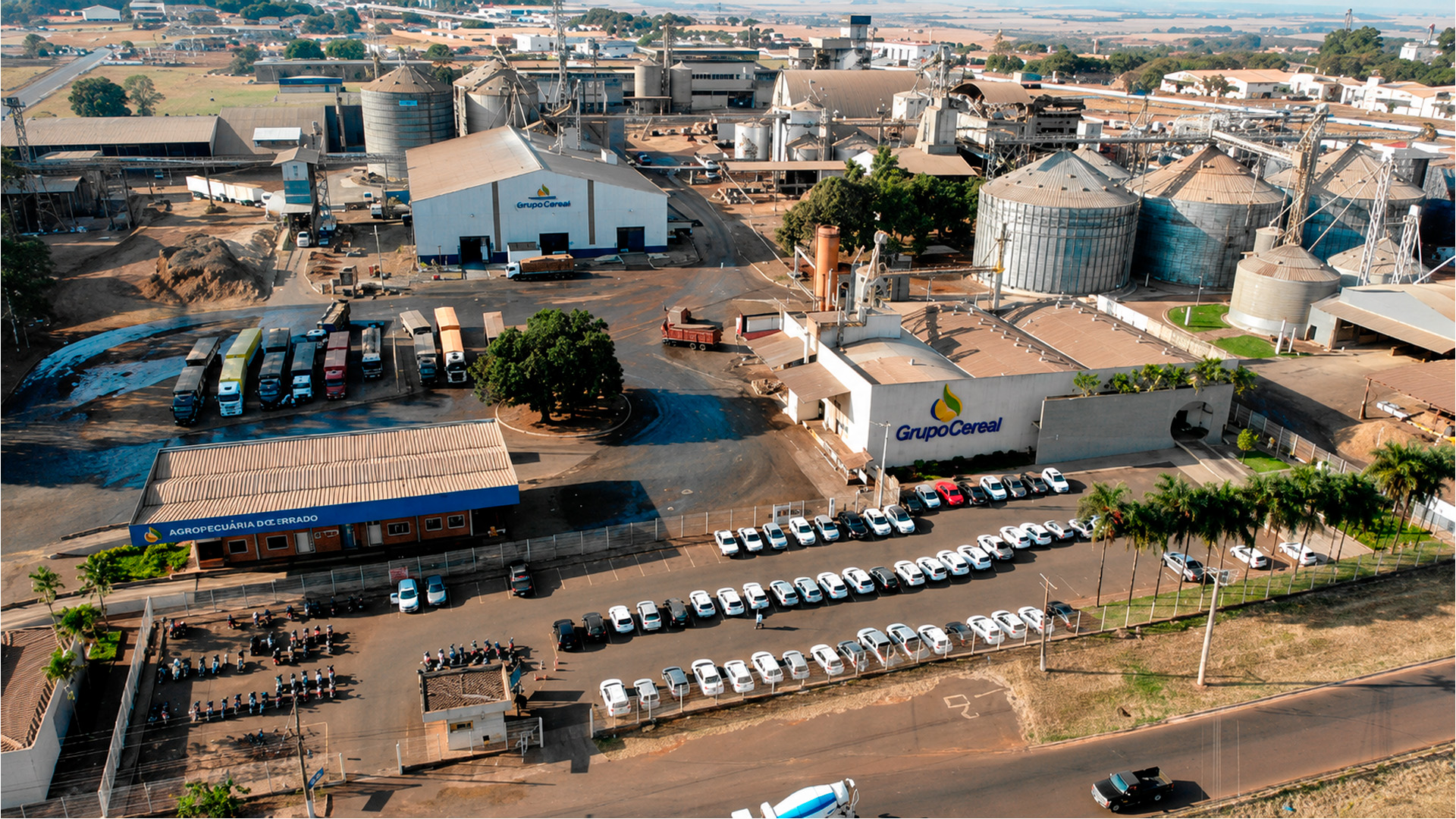
Founded in 1981, the Cereal Group is headquartered in Rio Verde, Goiás, and operates in different stages of the agro-industrial chain.
Its activities include soybean and corn sourcing, agricultural input trading, grain storage, soybean processing, production of soybean meal and vegetable oil, and biodiesel manufacturing.
The company receives approximately 2 million tons of soybeans and corn per year. Its infrastructure includes a static storage capacity of about 700,000 tons, distributed across 14 units.
The Cereal Group also has the capacity to process approximately 3,000 tons of soybeans per day and maintains an operation focused on biodiesel production.
In 2025, the company recorded revenue of R$ 5.2 billion, a result 23.8% higher than the R$ 4.2 billion recorded in 2024. The reported net profit for the period was R$ 292 million.
These figures demonstrate the scale of the Cereal Group's operations and help to contextualize the strategic relevance of Zen-Noh's entry into its shareholding structure.
A cycle of expansion of agro-industrial infrastructure.
Zen-Noh's entry comes at a time of expansion for the Cereal Group.
Between 2020 and 2025, the company invested approximately R$ 800 million in expanding its industrial infrastructure, building warehouses, and increasing its biodiesel production capacity.
In 2025 alone, approximately R$ 160 million was invested in expanding and acquiring storage units. These investments added approximately 150,000 tons to the group's static capacity.
For 2026, the expectation released by the administration was to make a further R$ 100 million in investments, focusing on expanding storage and starting the expansion of the biodiesel plant.
The stated plan foresees increasing daily biodiesel production capacity from 650,000 liters to 1 million liters starting in 2027. The future distribution of resources related to the new partnership has not yet been detailed by the companies.
Grain storage as part of a growth strategy
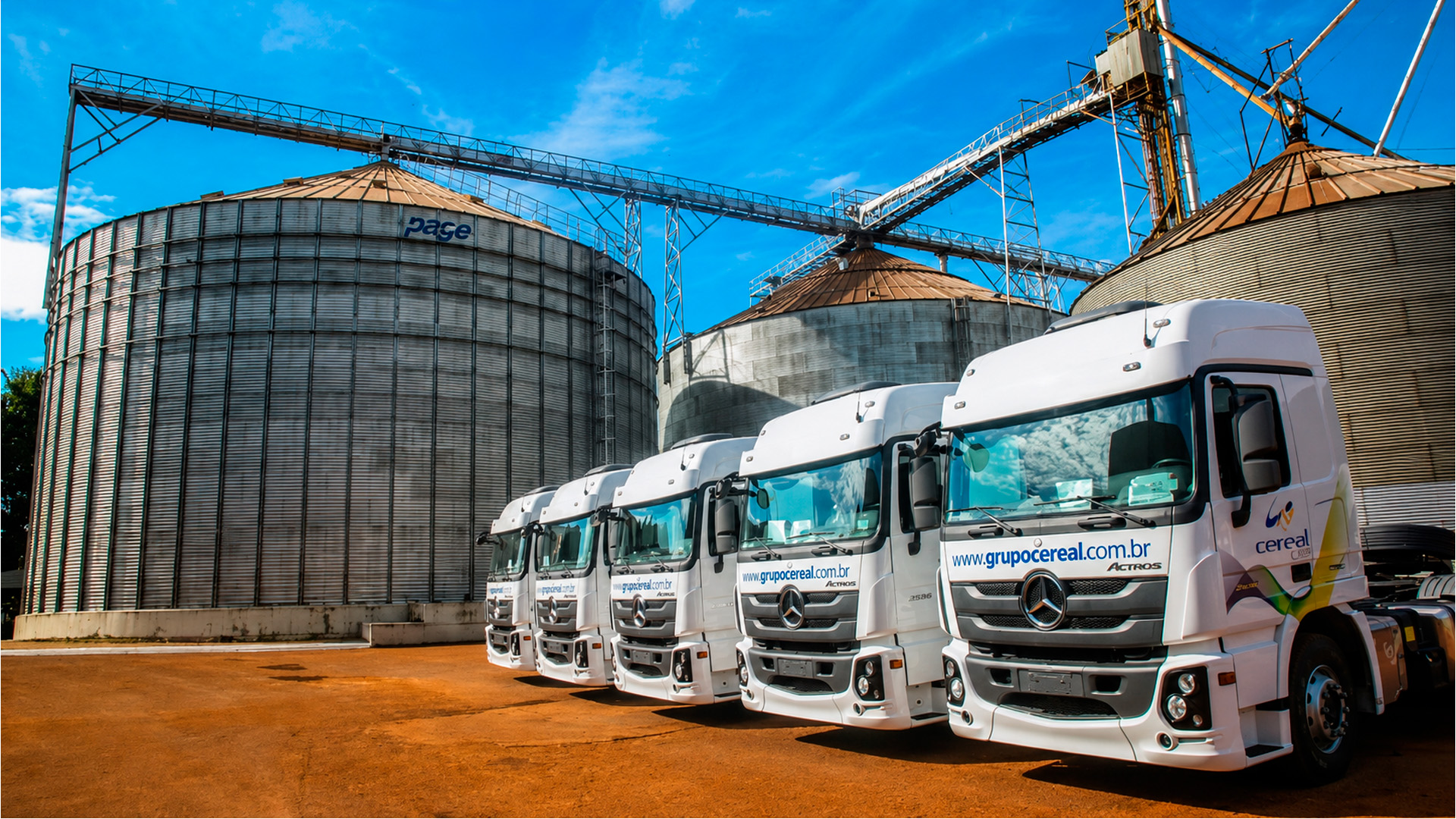
Storage is one of the areas directly mentioned among the partnership's priorities.
The growth of agricultural production depends on the existence of adequate structures to receive, clean, dry, move, store, and ship grains. When this infrastructure does not keep pace with increased production, logistical risks arise, along with losses in efficiency, queues, limitations in sourcing, and difficulties in serving different markets.
Expanding static capacity also allows for greater business flexibility. With more storage space, a company can better organize the flow of incoming products, reduce operational restrictions during harvest season, and plan shipments according to market conditions.
SL Process develops projects for grain storage, handling and processing units, Connecting engineering, logistics, and operations. The work may include studies, capacity definition, industrial layouts, receiving systems, conveyors, silos, drying, infrastructure, electrical installations, automation, and safety.
Soybean processing and bio-oil production
In addition to sourcing and storage, the Cereal Group maintains soybean processing operations.
Crushing transforms the grain into products such as bran and vegetable oil. These materials serve different markets, including animal nutrition, food, industrial products, and biofuel production.
The integration between origination, storage, and processing allows a company to participate in different stages of the value chain. Instead of only trading the grain, it begins to generate by-products with distinct characteristics, markets, and applications.
This type of operation requires coordination between receiving the raw material, preparing and processing the soybeans, extracting the oil, intermediate storage, industrial utilities, quality control, logistics, and operational safety.
SL Process works on projects of extraction and processing of vegetable oils, developing solutions related to processes, utilities, infrastructure, safety, and operational performance. The company has experience in agro-industrial units for soybean processing and the production of plant-based byproducts.
Biodiesel and adding value to agricultural production.
Biodiesel production is also part of the Cereal Group's structure and expansion plans.
Biodiesel allows for the transformation of oils and fats into renewable fuel, adding value to the raw material and creating a connection between agricultural production and the energy sector.
In an integrated operation, the oil obtained during soybean processing can be used as a raw material for biodiesel production. This integration reduces logistical steps, expands the utilization of the production chain, and creates new commercial opportunities for products originating from the industry.
Projects in this segment require technical knowledge of processes, raw material and product storage, thermal systems, utilities, electrical installations, automation, safety, fire protection, and regulatory requirements.
SL Process works in the development of projects for biodiesel and other biofuel plants, supporting projects from the study and engineering stages to implementation management.

Closer ties between Brazilian production and Asian markets.
Another objective highlighted by the companies is to gradually expand access for Brazilian production to international markets, especially in Asia.
The Cereal Group has relationships with producers, sourcing capabilities, and a regional presence in an important agricultural area. Zen-Noh, in turn, has an international network focused on the supply and marketing of agricultural products.
The combination of these structures could strengthen the connection between Brazilian production and international buyers. This could involve not only an increase in the volume traded, but also the need for greater control over quality, traceability, storage, logistics, and compliance with the specific requirements of each market.
The companies stated that they intend to establish this connection in a sustainable and long-term oriented manner. However, they did not disclose specific export targets, future volumes, or timelines for implementing the new initiatives.
What does this operation represent for Brazilian agribusiness?
Zen-Noh's entry into the Cereal Group represents yet another step towards closer ties between Brazilian agribusiness and international investors.
Brazil holds a significant position in the production and export of soybeans, corn, and their derivatives. For this potential to translate into industrial and commercial growth, continuous investments are needed in sourcing, storage, processing, logistics, and infrastructure.
The announced operation brings together a Brazilian company with a consolidated regional presence and an international organization interested in strengthening its supply chain.
From a sectoral perspective, this combination can contribute to three main trends.
Infrastructure expansion:
The partnership could support new investments in grain receiving, storage, and processing facilities.
Greater supply chain integration:
The Cereal Group's operations in soybean origination and processing, as well as biodiesel production, allow it to connect different stages of the agro-industrial chain.
Access to international markets:
Zen-Noh's global network could expand the commercial possibilities of production originating from the Cereal Group, especially in the Asian market.
These possibilities were presented by the companies as objectives of the partnership. The form, volume, and timeline of the investments have not yet been disclosed.
SL Process's participation in the transaction
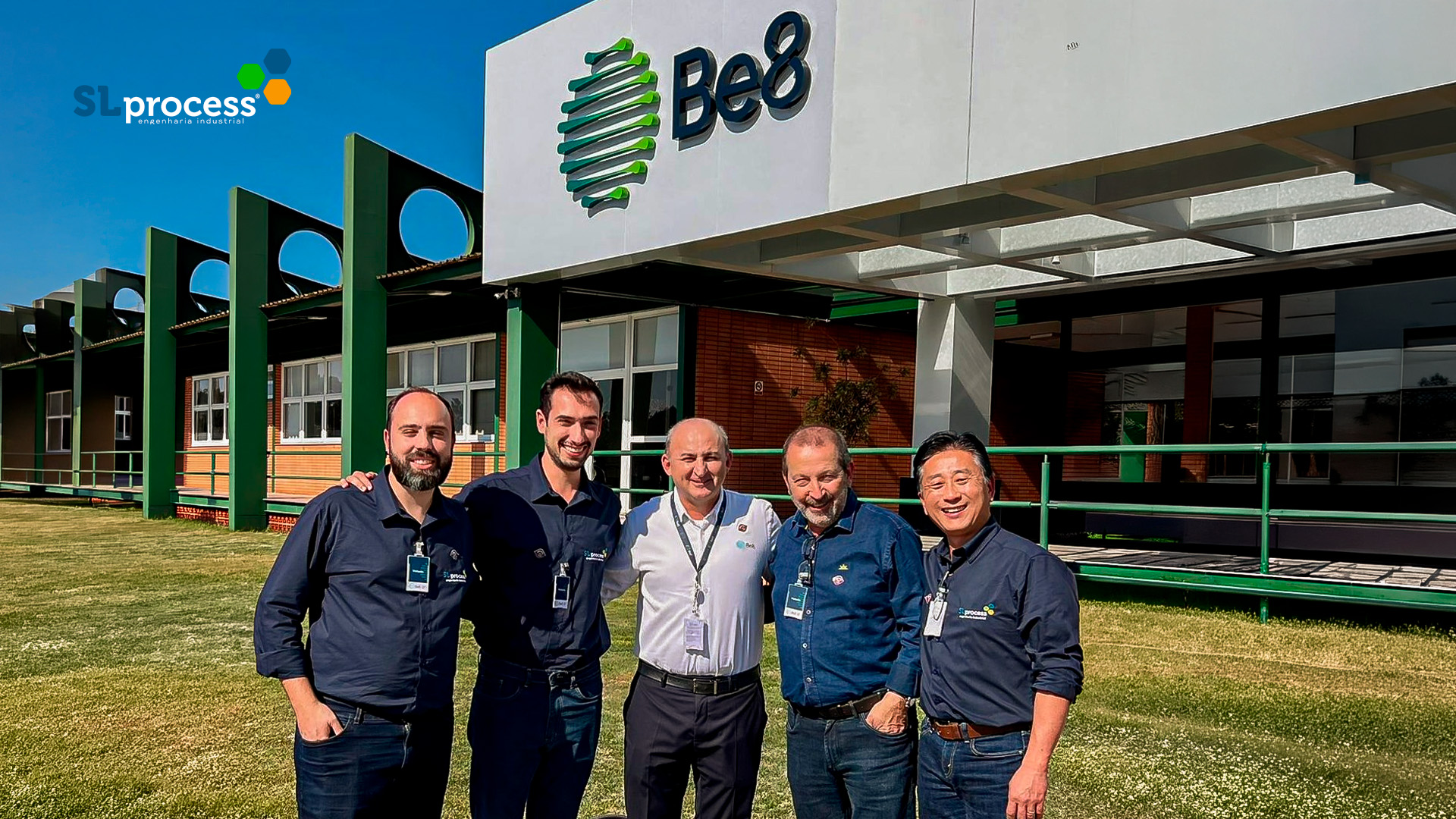
SL Process joined the team of advisors for Zen-Noh during the announced transaction with the Cereal Group.
The specific technical scope developed by SL Process has not been publicly detailed. For this reason, participation should be communicated objectively, respecting the confidentiality involved in operations of this nature.
SL Process's presence among the advisors is related to the company's experience in the development and analysis of agro-industrial ventures.
Founded in 2003, the SL Process operates in industrial engineering projects. In Brazil and Latin America, the company develops solutions from initial studies to execution, integrating consulting, engineering, procurement, and implementation management.
The sectors served include grain storage, biofuels, bio-oils, fertilizers, energy, and the food industry. This approach allows for the analysis of projects considering industrial processes, infrastructure, logistics, utilities, safety, and expansion capacity.
The importance of engineering in business decisions.
Decisions related to the acquisition, expansion, or modernization of industrial assets depend not only on financial and legal analyses.
An industrial plant has capabilities, limitations, risks, maintenance needs, and expansion possibilities that need to be understood technically.
Among the aspects that can be considered in industrial asset analyses are:
- Installed capacity and capacity actually used
- Conditions of civil structures and equipment
- Bottlenecks in receiving, storage and shipping.
- Status of electrical, mechanical, and automation systems
- Modernization or expansion needs
- Safety conditions and regulatory compliance
- Availability and reliability of industrial utilities
- Integration between processes, logistics and infrastructure
- Investments needed to sustain projected growth.
- Phased implementation possibilities
These analyses help investors and managers understand the physical and operational reality of a project and make decisions with greater predictability.
At SL Process, engineering is treated as part of the decision-making process. The company connects studies, projects, procurement, and management to support industrial investments from conception to plant commissioning.
Integrated engineering for agro-industrial projects
Agro-industrial projects involve interfaces between different technical areas.
A storage expansion, for example, may require adjustments to earthworks, drainage, civil structures, transport systems, electrical installations, automation, security, internal circulation, and shipping.
Similarly, increasing biodiesel processing or production capacity may require new equipment, utility expansions, layout changes, structural reinforcements, and integration with units that remain in operation.
SL Process brings together different disciplines to develop integrated solutions, including civil, mechanical, process, piping, electrical, instrumentation, automation, infrastructure, and planning engineering.
The company also operates in consulting, engineering, supplies and management, This allows decisions made in the initial stages to be connected to project development and the reality of implementation.
Next steps in the transaction
The operation is still subject to the necessary regulatory approvals.
Until this process is completed, companies must comply with the conditions established in the agreement and meet the requirements of the competent authorities.
Zen-Noh and the Cereal Group have stated that their current focus is on implementing the partnership and consolidating 30%'s stake. Any future expansion of the Japanese company's shareholding is not being discussed at this time.
Details regarding the distribution of investments among storage, biodiesel, geographic expansion, and new business projects were also not disclosed.
A strategic move for the agribusiness sector.
The agreement between Zen-Noh and Grupo Cereal combines international presence, regional expertise, grain origination, storage infrastructure, soybean processing, and biodiesel production.
Maintaining control by the founding family preserves the continuity of the Cereal Group's management. At the same time, Zen-Noh's entry could expand investment capacity and create new commercial connections with international markets.
For SL Process, joining the Zen-Noh advisory group represents participation in a significant operation for the development of Brazilian agribusiness and agro-industrial infrastructure.
The company appreciates the trust placed in them and...It understands the work of all the organizations and professionals involved in building the transaction.
About SL Process
A SL Process It is an industrial engineering company founded in 2003.
Based in Florianópolis, Santa Catarina, the company operates in projects throughout Brazil and Latin America, developing integrated solutions from initial studies to implementation management.
His experience encompasses projects of grain storage, biofuels, bio-oils, fertilizers, energy, food and industrial safety.
To learn more about the company, visit the page. Who we are.
To discuss studies, expansion, modernization, or implementation of industrial projects, please contact us. Contact the SL Process team..
Frequently Asked Questions
What stake does Zen-Noh intend to acquire in the Cereal Group?
The agreement provides for the acquisition of a 30% stake in the Cereal Group.
Will Zen-Noh take control of the Cereal Group?
No. The Barauna family will retain 70% of the capital and will continue to be responsible for the control, management, and strategic direction of the company.
Has the operation already been completed?
Not yet. Completion depends on approvals from the relevant regulatory bodies.
What was the value of the transaction?
The amount was not disclosed by the companies.
What was SL Process's involvement?
SL Process joined Zen-Noh's advisory team for the transaction. The specific scope of their work was not publicly disclosed.
What investments can be made?
The companies cited investments in grain receiving and storage, geographic expansion, increased investment capacity, and the development of new opportunities. The distribution of resources has not yet been disclosed.
Where does the Cereal Group operate?
The group operates in grain origination, input trading, storage, soybean processing, and biodiesel production.
Sources
Official website of Zen-Noh Grain Brazil
Official website of the Cereal Group.